

Key takeaways
- Make the inside safe first, including shutting off power near wet fixtures.
- Water enters higher than the stain, so trace it uphill in the attic.
- Pipe boots, chimney flashing, wall flashing and valleys are common entry points.
- Winter dampness spread across the roof deck may be condensation, not a leak.
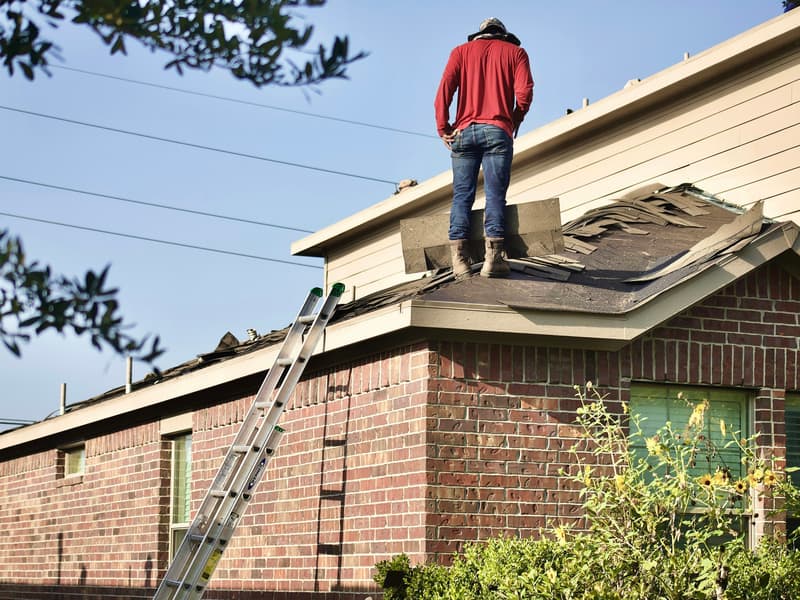
- Walking the roof and repairing flashing are jobs for a roofer.
Start inside and stay safe
When you find a drip or a new stain, deal with the inside first. Put a bucket under the drip and move furniture and electronics out of the way. If water is near a light fixture, ceiling fan or outlet, turn off that circuit at the breaker panel. A ceiling that sags or bulges with water can come down without warning, so keep people out from under it.
Next, write down what you know. Note when the leak started. Check whether it leaks only in heavy rain, only in wind-driven rain from one direction, or during a thaw after snow. A leak that appears only when snow melts points toward an ice dam or a flashing joint. A leak that appears in every rain is more likely a direct opening. These notes save a roofer a lot of guesswork.
Do not go on the roof during a storm or while it is wet. You can do most of the useful detective work from the attic and from the ground.
What to look for in the attic
If you have attic access, go up with a good flashlight during rain or just after it. Step only on the joists or on a floored area, because insulation alone will not hold your weight.
Look for these signs:
- wet or darkened wood on the underside of the roof deck
- water trails running down rafters or trusses
- damp, matted or stained insulation
- rusty nail tips, which can mean condensation rather than a leak
- daylight showing around a vent pipe, chimney or roof edge
Follow any wet trail uphill. Water almost always enters higher on the roof than where it lands. It runs along the decking or a rafter until it drips. Mark the highest wet spot you can find with tape or a marker so a roofer can match it to the outside.
In winter, frost or dampness spread across a large area of the deck is often condensation from warm, moist house air rather than a leak. The fix for condensation is better ventilation and air sealing, not new shingles. Older homes with bath fans that vent into the attic often have this problem.
Reading ceiling and wall stains
A stain shows where water ended up, not where it started. Its shape and location still give you clues.
- A stain near an outside wall, especially in winter, can point to an ice dam at the eave or a problem with the gutter and drip edge.
- A stain directly below a chimney, skylight or bathroom vent usually points to the flashing or seal around that opening.
- A stain in the middle of a room may come from water that ran along a rafter from higher up.
- A stain that grows after showers rather than after rain may come from plumbing, or from a bath fan duct dripping condensation.
Older houses often have plaster ceilings. Water can travel along the lath before it shows, and plaster can stay damp long after the leak stops. Let the ceiling dry fully before you repaint. Use a stain-blocking primer so the mark does not bleed back through.
Flashing, vents and chimneys
Leaks usually start at a seam or an opening, not in the open field of shingles. These are the usual suspects:
- Pipe boots. The rubber collar around a plumbing vent cracks with age and sun exposure. It often fails before the rest of the roof does.
- Chimney flashing. Step flashing, counterflashing and the mortar they sit in all wear out. On older brick chimneys, the brick and the crown can also soak up water and let it through.
- Wall and dormer flashing. Where a roof slope meets siding, missing or short step flashing lets water run behind the wall.
- Valleys. Debris piles up in valleys and slows the water down. Worn shingles in the valley then let it through.
- Skylights. A skylight leak can come from the flashing, the seal or condensation on the glass. An old skylight may be easier to replace than to keep patching.
- Exhaust and box vents. Wind-driven rain can blow in through damaged or poorly sealed vents.
From the ground, binoculars will show you bent metal, gaps, cracked boots and missing shingles. Heavy tar patches usually mark an old repair that deserves a closer look.
When to stop and call a roofer
Walking a roof is a job for a roofer. Steep pitch, wet shingles, moss and loose granules all make it easy to slip, and a fall from a roof edge can be serious. Call a roofer if:
- you cannot trace the leak from the attic
- the leak is near a chimney, wall or skylight
- you find soft or rotted decking
- the leak started after hail or high wind, since storm damage often needs to be documented
- there is more than one stain
Share your notes and photos with the roofer. A good roofer will find the entry point and show you what they found. They will also explain whether it calls for a repair or points to a wider problem. Gutters, leaks and keeping water out covers how water moves through the rest of the roof and gutters.
Frequently asked questions
Why does my roof leak only in certain storms?
Wind direction matters. Rain driven from one side can push water under a loose flashing edge or into a vent that stays dry in calmer weather. Note the wind direction when the leak shows up, because it helps a roofer narrow down which side of the roof to check.
Can a roof leak without leaving a stain inside?
Yes. Water can soak into insulation, run down inside a wall or dry out between storms without reaching the ceiling. A musty smell, peeling paint high on a wall or damp insulation in the attic can be the first signs.
Is moisture in the attic in winter always a leak?
No. Frost or dampness spread across the underside of the roof deck is often condensation from warm, moist air leaking up from the house. Better air sealing, insulation and ventilation usually solve it.
4 min read.