

Key takeaways
- Clean gutters in late fall and spring, and more often if trees overhang the house.
- Gutter guards reduce cleaning but do not end it.
- Downspouts should carry water well away from the foundation.
- Sagging gutters, leaking seams and stained fascia mean the system needs attention.
- Gutter work on two-story houses and steep roofs is best left to a pro.
How often to clean gutters
For most Ohio homes, two cleanings a year is the minimum. Do one in late fall after the leaves are down. Do another in spring to clear winter debris, seed pods and shingle granules. If large oaks, maples or pines grow close to the house, you may need three or four cleanings. One of them should come in early summer, when maple seeds land in the gutters.
The fall cleaning matters most. Gutters full of wet leaves hold water going into winter. That water freezes, adds weight and can pull the hangers loose. Clogged gutters also make it more likely that ice builds up along the eave.
Between cleanings, watch your gutters during a heavy rain. If water spills over the front edge or a downspout only trickles, there is a clog somewhere.
Cleaning gutters safely
If you clean your own gutters on a single-story house, a few habits make the job safer:
- Set a sturdy extension ladder on firm, level ground. Use a standoff so the ladder does not rest on the gutter.
- Keep three points of contact, and move the ladder instead of reaching.
- Scoop debris into a bucket by hand or with a gutter scoop. Then flush the gutter with a hose, working toward the downspout.
- If a downspout is clogged, try flushing it from the bottom up or disconnecting the lower elbow.
- Stay clear of power lines running to the house.
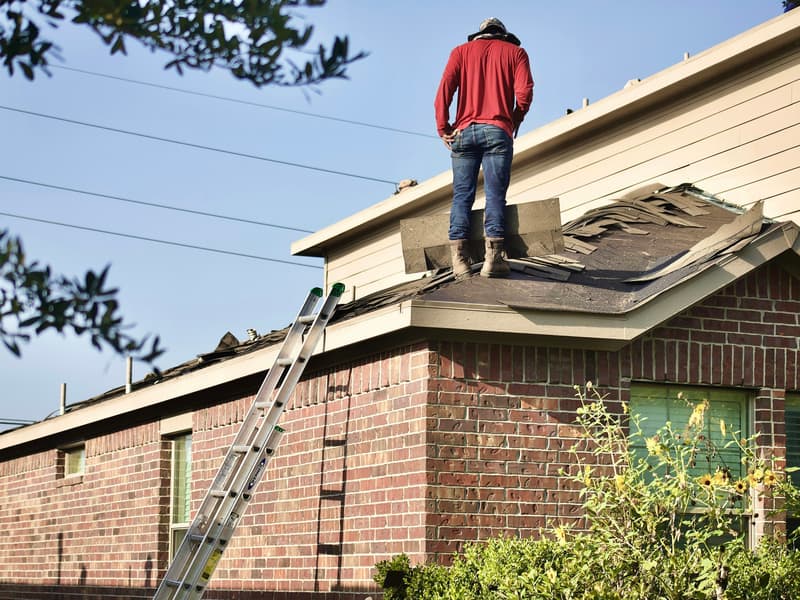
Leave two-story homes, steep roofs and any spot you cannot reach from a properly set ladder to a pro. Walking the roof to reach the gutters is not worth the risk. A professional cleaning visit is also a good time to have someone check the roof edge and fascia.
What gutter guards can and cannot do
Gutter guards come as screens, mesh, perforated covers and solid hoods. Solid hoods rely on water curling over a rounded edge into the gutter. All of these types keep out larger leaves and cut down on how often you clean, which helps under heavy tree cover.
They do not end the need for cleaning. Pine needles, seed pods and shingle grit can collect on top of mesh or work their way inside. In winter, ice can form on top of the guards. Some covers can also let water from heavy downpours shoot past the gutter.
If you are considering guards:
- choose a style that suits the trees around your house
- check how they attach. Some slide under the first course of shingles, which can damage the roof if installed carelessly.
- plan to check and rinse them at least once a year
Guards work best on gutters that are already sound, properly pitched and securely fastened.
Downspouts and extensions
A gutter that works perfectly does little good if its downspout empties against the foundation. Much of Ohio sits on clay soil that drains slowly. Water dumped at the base of a wall tends to stay there, and it can find its way into basements and crawlspaces.
These fixes help:
- add extensions or splash blocks so water lands several feet from the house
- make sure the ground slopes away from the foundation where the water lands
- run a hose into buried downspout lines. If water backs up, the line may be clogged or crushed.
- add downspouts on long gutter runs that overflow in heavy rain
Hinged extensions that flip up are handy near walkways and along mowing paths. Buried lines that have collapsed may need to be dug up and replaced or rerouted.
Signs your gutters are failing
Gutters wear out. Find out what is actually failing before you pay to fix anything. Watch for these signs:
- sagging sections, or hangers pulling out of the fascia
- leaks at seams and corners, or rust spots on steel gutters
- water still standing in the gutter a day after rain, which means the pitch is off
- peeling paint, staining or soft wood on the fascia behind the gutter
- streaks down the siding below the gutter, or mulch washed out along the drip line
- gutters that cannot keep up with a large or steep roof
If the fascia is soft, it needs to be repaired before new gutters go up. Overflow may also have reached the siding or the wall behind it. A roofer or gutter installer can tell you whether gutter repair or replacement makes sense. Gutters, leaks and keeping water out explains how gutters fit with the rest of the roof's water protection.
Frequently asked questions
Are gutter guards worth it in Ohio?
They help most under heavy tree cover, where they cut down on how often you have to clean. They still need checking and rinsing, and ice can build up on top of them in winter. Match the guard style to the trees around your house.
How far should downspouts drain from the house?
Water should land several feet from the foundation, on ground that slopes away from the house. If your basement has taken on water before or your yard holds water after rain, extend the downspouts farther or have a buried drain line checked.
Should I knock icicles off my gutters?
Avoid knocking down large icicles from below. They are heavy and can fall in unexpected ways. Long icicles usually mean heat is escaping into the attic, so a roof rake used from the ground and better attic insulation are safer long-term fixes.
4 min read.