

Key takeaways
- Stay off the roof and away from downed lines. You can spot most damage from the ground.
- Photograph everything before cleanup or repairs.
- Make only the temporary repairs you can do safely, and keep every receipt.
- Call your insurer or agent early to learn your policy's deadlines and steps.
- Check out any roofer before you sign, especially one who knocks on your door.
Safety comes first after a storm
When a storm passes, the urge is to grab a ladder and look. Wait. Wet shingles are slick. Wind can loosen gutters and flashing that still look secure. A roof that took hail may also have weak spots you can't see from the top.
Start with the hazards on the ground:
- Downed or sagging power lines. Stay well clear and report them to your utility. Assume every line is live.
- Tree limbs on the roof. A limb resting on the roof can be bearing weight. Removing it is a job for a tree service or a roofer, not a homeowner on a ladder.
- Water inside. If water is dripping near light fixtures or outlets, shut off power to that area at the breaker. Only do this if you can reach the panel safely and stay dry.
- Sagging ceilings. A drywall ceiling that bulges with water can come down. Keep people and pets out of the room and move what you can.
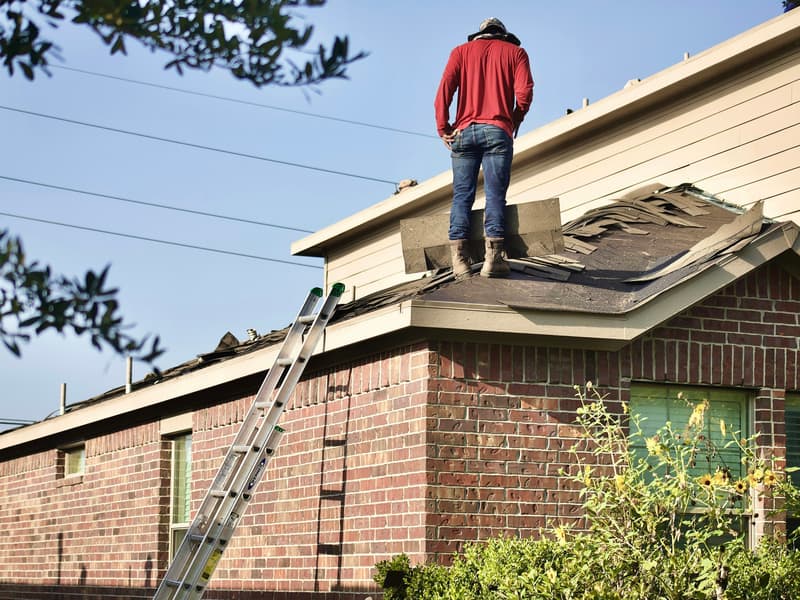
Walking a roof is a job for a pro with fall protection, even on a low ranch house. You can see most of what you need to know from the yard, from a window, or with binoculars.
Signs of hail and wind damage you can see from the ground
Hail and wind leave different marks. Hail tends to bruise and dent. Wind tends to lift shingles, crease them, and tear them off.
For hail, check the soft metals first, because they show impacts clearly. Look at gutters, downspouts, roof vents, chimney caps, and the fins on an outdoor AC unit. Dents there tell you the hail was big enough to matter. Then look for dings in siding, torn window screens, and marks on a deck or car. Granules piling up at the bottom of downspouts or washed onto the driveway can mean shingles lost part of their protective surface.
For wind, walk the yard. Pieces of shingle, ridge cap, or flashing in the grass point to the side of the roof that took the hit. From the ground, look for missing tabs, shingles that are lifted or folded back, and dark patches where underlayment is showing.
Many Ohio homes have older roofs, and some have more than one layer of shingles. Older shingles get brittle and crack more easily under hail or wind, so the damage can be worse than it looks from below. For a closer look at each sign, see how to spot hail damage on a roof.
Document the damage before anything changes
Good records make every next step easier. That holds whether you file a claim or just want an accurate estimate from a roofer. Take photos before cleanup, before temporary repairs, and before the next rain.
- Take wide photos of each side of the house, then close-ups of the damage.
- Photograph dented gutters, vents, siding, screens, and anything in the yard that came off the roof.
- Inside, photograph ceiling stains, wet insulation you can see from the attic hatch, and damaged belongings.
- Set a coin or tape measure next to dents or hailstones for scale.
- Write down the date and time of the storm, and save any weather alerts you received.
Keep the photos with their original dates. Don't throw out damaged items until you know whether your insurer wants to see them. If you start a temporary fix, photograph the area before and after.
Temporary repairs and when to call a pro
A temporary repair keeps water out until the roof can be fixed properly. Many insurance policies expect you to take reasonable steps to prevent further damage. Act quickly, as long as you can stay safe.
Most homeowners can do these things from inside or on the ground:
- Put buckets or bins under drips, and move furniture, rugs, and electronics.
- Soak up standing water, and run fans or a dehumidifier to slow mold.
- Clear storm debris from downspout outlets at ground level so water drains away from the foundation.
These jobs belong to a roofer:
- Tarping a roof. A tarp has to run over the ridge and be fastened so wind can't get under it. Done wrong, it tears off or funnels water into the house.
- Anything that means climbing onto a wet or damaged roof.
- Removing limbs, or reattaching flashing, gutters, or skylights.
In Ohio, a small opening left alone through fall can get much worse once freeze-thaw cycles start. Ice can also back up under damaged shingles in winter. Keep receipts for tarps, materials, and any emergency work. If you need the roof sealed up, a roofer who handles storm damage repair can tarp first and assess the rest once it is safe.
How insurance claims generally work
Every policy is different, so read yours or call your agent before assuming anything. Most roof claims follow roughly these steps:
- Report the damage. Call your insurer or agent, or file online. Write down your claim number.
- Prevent more damage. Make safe temporary repairs and keep the receipts.
- Adjuster inspection. The insurer sends an adjuster to look at the roof and the rest of the house. Having a roofer there to point out damage can help.
- Estimate and decision. The adjuster writes up what the insurer will cover, minus your deductible. Some policies pay the full cost to replace. Others pay a depreciated value for an older roof.
- Repairs and follow-up. Sometimes a roofer finds hidden damage once work starts, such as rotted decking. That damage is documented and sent to the insurer as an additional request.
Policies often set time limits for reporting damage, so call soon after the storm. None of this is legal advice. If you have questions about your rights, the Ohio Department of Insurance has consumer resources. For more detail, see how roof insurance claims usually work.
Avoiding storm chasers
After a big hailstorm, crews from out of town often show up within days, knocking on doors and offering inspections. Some do fine work. Others take deposits and disappear, or finish fast and are gone when a leak shows up next winter.
Watch for these warning signs:
- Pressure to sign today, or a claim that your insurer needs a decision right away.
- No local address, just a phone number and a truck with out-of-state plates.
- A request for a large payment before any materials arrive.
- An offer to cover or waive your deductible. That can amount to insurance fraud, and you can be the one exposed.
- A short form at the door that turns out to be a contract or gives them control over your claim.
Take your time. Get written estimates from more than one roofer, and call references from recent jobs near you. Check with your city or village building department about permits and any contractor registration it requires. If you did sign at your door, you may still have a short window to cancel, so read the cancellation notice. For a fuller checklist, see how to avoid storm-chaser roofers.
Frequently asked questions
Should I climb up to check my roof after a hailstorm?
No. Wet or damaged shingles are slippery and can hide weak spots, and falls from roofs cause serious injuries. Check from the ground, from a window, or with binoculars, and leave the roof itself to a roofer with fall protection.
Do I need a roofer before I call my insurance company?
Not necessarily. You can report damage to your insurer right away. Many homeowners also have a roofer inspect around the same time, so they know what to point out to the adjuster.
Can small hail damage a roof?
It can, especially on older or brittle shingles. Small hail may not crack a shingle, but it can knock granules loose and shorten the shingle's life. Dents in gutters and vents are a good clue that the hail was big enough to leave marks.
How fast should I deal with storm damage?
Make the house safe and keep water out right away. Report the damage to your insurer promptly, since policies usually set deadlines. Plan permanent repairs before winter, when freeze-thaw can make small problems bigger.
5 min read.