

Key takeaways
- Read your policy or call your agent first. Deductibles, coverage, and deadlines vary.
- Document damage with dated photos before repairs or cleanup.
- Having a roofer at the adjuster visit can help make sure damage isn't missed.
- Get everything in writing, and never sign over control of your claim at the door.
Read your policy before anything else
Nothing here is legal advice, and nothing about a claim is guaranteed. Your policy decides what is covered. Before you file, find your declarations page or call your agent and look for these points:
- Your deductible. Some policies have a separate deductible for wind or hail, sometimes set as a percentage instead of a flat amount.
- How the roof is valued. Some policies pay what it costs to replace the roof. Others pay actual cash value, which subtracts depreciation for age.
- Deadlines. Policies often set a time limit for reporting damage after a storm.
- What you are expected to do. Most policies ask you to take reasonable steps to prevent further damage.
If anything in the policy is unclear, ask your agent to explain it in writing.
Document and report the damage
Before you call, gather what you have. Take wide photos of each side of the house and close-ups of the damage. Include dented gutters, vents, siding, screens, and any shingle pieces in the yard. Inside, photograph ceiling stains and damaged belongings. Note the date and time of the storm.
Then report the claim by phone, through your insurer's app or website, or through your agent. Write down your claim number, the name of everyone you talk to, and the date. Keep a single folder, paper or digital, for photos, receipts, letters, and estimates.
If water is getting in, arrange a temporary fix such as a tarp, and keep the receipt. Tarping is a job for a roofer, not a homeowner on a wet roof. If you are not sure what counts as damage, read how to spot hail damage on a roof first.
What happens at the adjuster visit
Your insurer will assign an adjuster, who may be an employee or an independent adjuster working for the insurer. The adjuster will schedule a visit to inspect the roof, gutters, siding, and any interior damage. They often mark hail hits on the shingles with chalk and take their own photos and measurements.
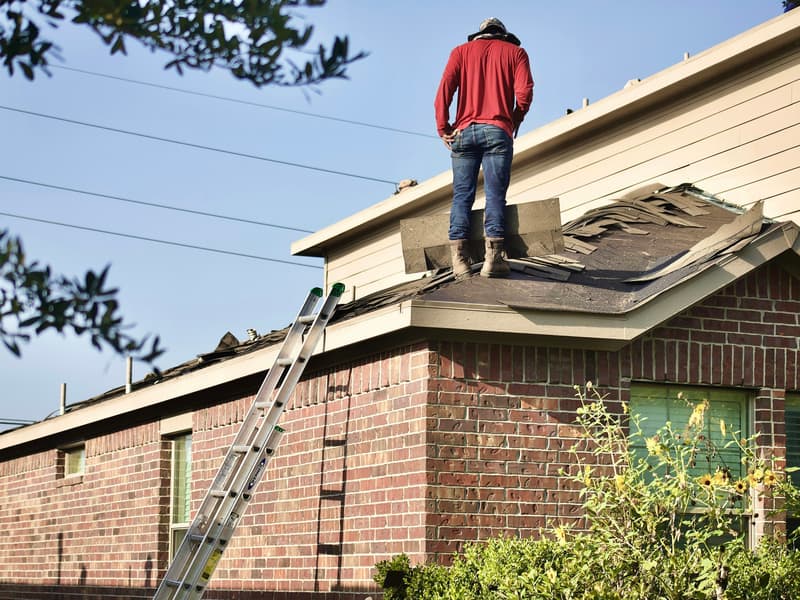
It can help to have a roofer there at the same time. A roofer can point out damage the adjuster might miss, such as cracked flashing, damaged vents, or soft decking. They can also talk through what a proper repair or replacement would involve.
Share your own photos and notes, and ask questions. Ask the adjuster when you can expect a written estimate, and what happens next.
Reading the estimate and what comes after
The insurer's estimate lists the work and materials it will cover, and it subtracts your deductible. If your policy uses depreciation, you may see two figures. One is the full replacement cost. The other is a lower amount paid first. On some policies, part of the withheld depreciation can be paid later, once the work is complete. Ask your insurer exactly how yours works.
Compare the estimate with a written estimate from a roofer. Look for missing items like drip edge, flashing, vents, or gutters. If the estimate seems incomplete, ask the insurer to explain it, send more photos, or request a re-inspection. Many policies also describe a formal dispute process.
Sometimes a roofer finds hidden damage once the old shingles come off, such as rotted decking. That damage is documented and sent to the insurer for review. If the claim leads to a full roof replacement, make sure the scope of work is in writing before anything starts.
Things to be careful about
A few habits protect you during a claim:
- Don't sign anything at the door that gives a contractor authority over your claim or commits you to them before you have read it fully.
- Be wary of anyone who offers to cover or waive your deductible. That can amount to insurance fraud.
- Get every estimate, change, and promise in writing.
- Keep copies of every check, letter, and email.
If you have questions about your rights as a policyholder, the Ohio Department of Insurance offers consumer help. For more on vetting contractors after a storm, see how to avoid storm-chaser roofers.
Frequently asked questions
Will filing a claim raise my premium?
That depends on your insurer, your policy, and your claims history. Ask your agent directly if you are concerned. Waiting too long to report real damage can cause its own problems with a claim.
Should a roofer be at the adjuster inspection?
It often helps. A roofer can point out damage the adjuster might miss and discuss how the repair should be done. Policies don't usually require it, but it can lead to a more complete estimate.
What if the adjuster's estimate seems too low?
Ask the insurer to explain how it reached the figure, and send new photos or a roofer's written estimate. You can request a re-inspection, and many policies describe a formal dispute process.
3 min read.