

Key takeaways
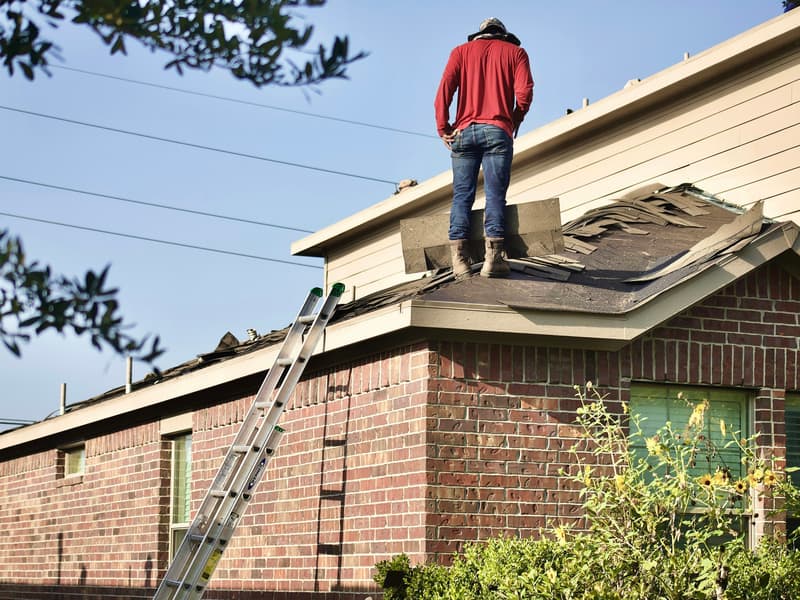
- Stay off the roof. Check from the ground and leave the roof surface to a pro.
- Dented gutters, vents, and downspouts show how hard the hail hit.
- Granules in downspouts or on the driveway can signal shingle damage.
- Bruised shingles usually need a roofer's close inspection to confirm.
Stay off the roof
The most useful hail check happens from the ground. Shingles are slick after rain. Hail-damaged areas can be soft underfoot. Even a modest pitch is enough to cause a bad fall. Walking on a damaged roof can also crack brittle shingles and add damage that wasn't there before.
Use your eyes, a phone camera with zoom, or binoculars. Check from the yard, from a neighbor's driveway, and from any upstairs window that looks out over a lower roof. If you need someone to look closer, that is a job for a roofer with proper fall protection.
Start with gutters, vents, and other metal
Soft metal shows hail better than anything else on the house, so it is the best place to start.
- Gutters and downspouts. Look for round dents along the front edge of the gutters and on the downspouts. Spacing that looks random points to hail, not a ladder or a ball.
- Roof vents and flashing. Box vents, turbine vents, and pipe boots often show dents you can see with binoculars.
- Chimney caps and metal trim. Dings or chipped paint on these are another clue.
- AC unit fins. The thin fins on an outdoor condenser bend easily under hail.
Also look at siding, window screens, light fixtures, and the top of your car or grill. Dents in metal don't prove the shingles are damaged. They do tell you the hail was big enough to leave marks, and that is a good reason to have the roof itself looked at.
Granules in downspouts and on the ground
Asphalt shingles are covered in small mineral granules that protect the asphalt from sun and weather. Hail can knock them loose.
After a storm, check where your downspouts empty. Look for a pile of coarse, sand-like grit, or a dark streak of granules washed across the driveway or patio. Some granule loss is normal over a roof's life, and new shingles shed loose granules for a while. A sudden heavy amount right after a hailstorm is different and worth noting.
Take a photo of what you find before you rinse it away. If your gutters are full of granules or damaged by the storm, have them checked along with the roof. Dented or sagging gutters can drain poorly, and in Ohio winters that can lead to ice buildup at the eaves. A roofer who handles gutters can tell you whether yours need repair or replacing.
What bruised and damaged shingles look like
Up close, hail damage on asphalt shingles usually shows up as:
- Dark spots where granules are missing, often roughly round and scattered without a pattern.
- Bruises, spots that feel soft when pressed, like a bruise on an apple.
- Exposed mat, where the fiberglass layer under the asphalt shows through.
- Cracks or broken edges, more common on older shingles that have gone brittle.
Wind damage looks different. Expect missing tabs, creased shingles that were lifted and folded back, and bare patches of underlayment. Pieces of shingle in the yard are a giveaway.
Many of these signs are hard to judge from the ground. Some, like bruising, can only be confirmed by touch. Older roofs, which are common across Ohio, can be harder still to read, because normal aging can look a lot like storm damage.
When to have a roofer inspect
Call a roofer if you find dented metal, heavy granule loss, shingle pieces in the yard, or a new stain on a ceiling. A roofer can walk the roof safely and mark individual hits. They can also tell storm damage apart from normal wear, and check the attic for signs of leaks.
Hail damage doesn't always leak right away. A bruised spot can crack and wear faster over the following seasons, especially through freeze-thaw cycles. Finding it early gives you the most options, whether that means a roof repair or a larger job.
Photograph what you found from the ground, and write down the storm's date. If the damage looks significant, read how roof insurance claims usually work before you call your insurer.
Frequently asked questions
Is hail damage always visible from the ground?
No. Dents in metal and granules on the ground are often easy to see, but bruised shingles usually need a close, hands-on inspection. A roofer's inspection is worth it after a significant storm.
Does losing some granules mean I need a new roof?
Not always. Shingles shed some granules over their life, especially when new. A sudden heavy amount after a storm, along with bare spots or dented metal nearby, is a bigger concern and worth having checked.
Can hail damage show up later?
Yes. A bruised shingle may not leak right away, but the damaged spot can crack and wear faster, particularly through Ohio freeze-thaw cycles. Leaks or bare spots can appear months after the storm.
3 min read.